Stone Table Tomb
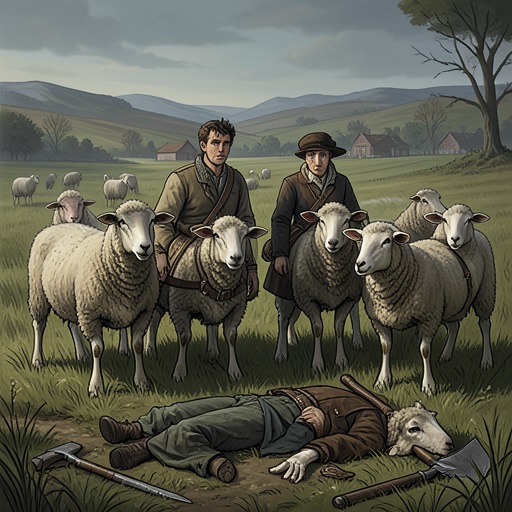
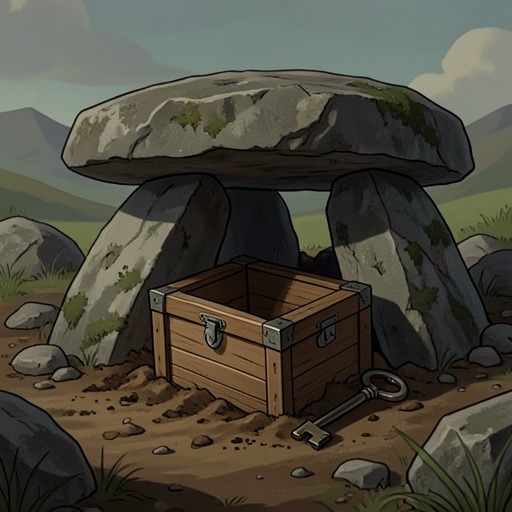
Three Bags FullThe Stone Table Tomb is a prehistoric monument in the meadow near the place where George Glenn is found dead, a spade pinning him to the ground. Its capstone and shadow turn the structure into more than a landmark: the sheep search beneath it for a human object that may help them identify the murderer, and later evidence connects it to George’s concealed contraband. The tomb stands within a pastoral landscape that looks open and peaceful but is threaded with secrecy, violence, and disputes over who may use the land.
Setting and Relation to George’s Death
George’s body lies in the grass beside the Hay Shed, not far from the path through the fields. The Stone Table Tomb is close enough to become part of the immediate scene: Othello disappears into its shadow while George remains pinned nearby, and Miss Maple stays by the water trough trying to wash blood from her nose. The sheep meanwhile keep watch across the meadow, toward the road, the path, and the cliff. This arrangement places the ancient structure inside an active landscape of observation and concealment rather than apart from the flock’s daily life.
The tomb’s proximity to George’s body gives it an ominous charge, but it does not initially explain the killing. The sheep have to distinguish the threat they fear—a wolf—from the human violence indicated by the spade. Their investigation turns instead on a smaller question: whether an object left or hidden by people can lead them to the person responsible.
The Night Search
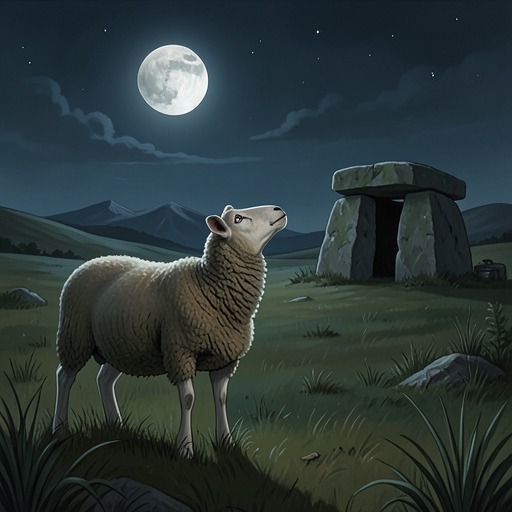
Miss Maple reasons that human beings are attached to Things and that watching such objects might reveal the murderer. The flock therefore organizes an expedition to the tomb at night, despite their fear of the wolf’s ghost. Sir Ritchfield leads; Othello, Miss Maple, Maude, Zora, and the reluctantly included Mopple the Whale accompany him. Maude remains outside to scent for danger while the others peer beneath the capstone.
The search is difficult in the moonlit darkness. Night aromas dull the sheep’s sense of smell, and their bodies cast shadows over the earth beneath the stone. Othello scrapes the soil away with his hooves; when Mopple steps back, a shaft of moonlight exposes the object. The anticipated marvel proves to be only a thin circular chain with a piece of metal attached. Its human smell—sweat and metal, with another sharp, unfamiliar scent—makes it significant to the flock even though its appearance disappoints them. The tomb thus becomes the first site where their theory about human objects meets a physical clue.
The search is interrupted when a beam from a torch sweeps over George’s shepherd’s caravan. Three men approach, trying to find somewhere to hide, and the sheep overhear them discussing the danger of the police finding dope on the property. The men connect George’s refusal to sell the land, his hostility toward tourists, and nighttime boat landings to a suspected smuggling operation. The flock is hidden beneath the capstone while the human visitors search elsewhere, making the tomb a literal shelter from discovery as well as a place of investigation.
The Tomb, the Land, and What Is Concealed
The nearby caravan and garden make clear how closely the tomb sits within George’s working pasture. Behind the caravan, George had fenced a small plot of lettuces, peas, radishes, cress, tomatoes, endives, buttercups, and chives. After his death, the sheep break in and eat the garden bare; Othello, who has not joined the raid, then alerts Miss Maple to the absence of George’s garden spade. The flock’s ordinary grazing and its search for evidence therefore unfold in the same small area, where human boundaries and animal appetites repeatedly meet.
The men’s conversation gives the land a second, contested history. They complain that George rejected offers to sell and kept visitors away, while claiming that he profited from contraband brought ashore at night and taken to the caravan. They also fear that discovery of the drugs will ruin plans for a seaside hotel, a cultural centre, and other tourist attractions. These are the men’s allegations, not a neutral account, but they reveal the competing interests gathered around the pasture: George’s control of his land, the flock’s use of it, and outsiders’ hopes of turning it into a commercial destination.
The tomb later proves connected to the concealed grass: Rebecca finds it beneath the Stone Table Tomb, and Mopple’s long-standing curiosity about it culminates in his secretly eating the packet’s contents. The hiding place consequently links the flock’s physical investigation to a secret in George’s human life. Its pastoral setting offers no guarantee of innocence or quiet; beneath the ancient stone lie traces of the same hidden dealings that make the surrounding land valuable and dangerous.